Friday, February 29, 2008

Excellent perspective on micro and macro


Evolvement Through Difficult Situations
"When one decides to participate in the linear the eternal perspective available offers comfort of the end result. Upon manifesting in the time-line the physical consciousness tends to disassociate with the larger viewpoint.

The condensed perspective is intense, often leading the individual into despair.

Difficult situations are sometimes necessary for the soul to evolve, and are created purposefully by the individual. We realize the unpopularity of such a creative moment when one is considering the probabilities, however, it is true that some lessons require a strong experience for evolution to occur.

The evolved perspective considers the experience and often in hindsight knows that even the most negative experience can produce a positive outcome.

The trick is to survive the moment to reap the benefits of the experience. Support from eternal energy is available, but not always called upon in the appropriate manner.

Remember that you are an eternal energy having a physical experience, not the other way around.

Instead of bemoaning the creation contemplate the information received and move forward.

Stay true to your soul and its energy, and receive the lessons and use them to move forward. Often while physical the recreation of the events occur until one comes to that conclusion.

Learn the lesson and move forward. Forgive but do not forget the moment. Difficulty can be replaced by easiness if one pays close enough attention.

Again, we realize the reluctance of those stuck in a negative pattern to receive this information, however, we feel the infinitive power of the Soul and align our energies with it, so as to help you through it.

You are not alone."

--VERONICA

Dear VERONICA

Dear Veronica,
After we die physically how long (in earth time?) do we wait before we incarnate again?

I heard that we often incarnate with the same family but that doesn't make a whole lot of sense to me.

For example, my sister Cathy died a few years ago. At the time of her death she was being greeted by our long time deceased grandmother.

I had a dream before my sister died and in that dream my grandmother told me not to worry about Cathy because she would take care of her.

Does this mean that my grandmother was waiting all this time for her? Or, in any other case could it be that we just keep moving along into one body right after another?

One last question: Is my sister Cathy still on the other side or has she incarnated again by now? Thank you!
Barbara


Dear Barbara,

Reincarnation is not a linear process. Most on the earth plane perceive it from that point of view, however. In the larger picture there is a multi-dimension aspect that is not being considered.

For example, one may incarnate in the American Revolution then move forward so to speak into the Middle Ages.... a difficult concept to comprehend while in the time-line.

No, your sister Cathy is still in contemplation with her guides. For her the measurement of time is now irrelevant while to you it's the basis of your current existence.

--VERONICA


Dear VERONICA,

After this present "linear" existence has changed into non physical, how do our opposing earthbound religious and political differences and indifference's meet up?

Is there common ground?

Or do we find ourselves continuing with the particular present religious or political systems we may have embraced?

Douglas


Dear Douglas,

The linear choices of belief systems are attached to the linear life in hopes that by choosing them one will embark upon evolution.

However, it usually results in the belief systems interfering with the evolution of the soul.

Since there are multiple linear lives, the belief systems are ever evolving. The older the soul in experience the less influence the linear belief system has upon the life.

Ultimately the soul will become more involved in the process causing physical cognitive moments to be more discerning when choosing a belief system to become involved with.

--VERONICA

Wednesday, January 30, 2008

Saturday, October 27, 2007

I really can bring out radiant beauty

This is not an idle boast.

Life for me has been about sensitizing myself on a finer and finer level. When you devote every waking and sleeping moment of your life on earth paying attention, you are able to be guided strongly.

I'm not a Goddess, I am not someone who manipulates reality. But I AM super sensitive to your pulsings.

If you are willing and open, I can begin a process of correcting the misaligned pieces of your puzzle back into their spots. Let's see, other ways of describing what I do:

I can detect holdings and blocks in small muscles which lead me to more subtle flows at those points. By gently caressing holdings or with other types of pressure, I can help you release feelings you have forgotten about. The result is a kinder, happier, more open visage.

More later, Just wanted to get this down while I was thinking of it.

Friday, October 19, 2007

"How Often Should I Receive A Facial?"


This is an excellent and often asked question.

There is no one answer as professional skin therapy is dependent upon our agreed upon goals.

At all my initial sessions, I spend time reviewing and examining my clients' inclinations toward regular skin care sessions.

If my client desires to have a very special one to one session as a special occasion, I would recommend regular sessions at a minimum of one month intervals. This gives a professional cleaning while I spend most of my time doing relaxation and toning massage of the face.

Scheduled facial recommendations
  • Monthly sessions
    • maintains your current condition.
  • Bi monthly Session:
    • Disinfection begins to take effect
    • Mild inflammation
    • Acne
    • Eczema
    • Over Exposure to Sun or Wind
    • Anti-Aging Treatments
    • In between peel maintenance
  • Weekly Sessions
    • Very important for severe cases of acne and breakouts
    • Acne
    • Rosacea
    • In between peel maintanance
    • Combats dry skin and all other environmental damage
    • Maximizes anti-aging treatments

Thursday, October 18, 2007

The Secret (Tongue in Cheek)


I understand how it works for me, this act called manifesting.

I am the Prima Materia, Master of my vehicle

Desire potentially results in planning.
Planning potentially results in action.
Action yields results which inform me what I was really planning to take responsibility for.

Thursday, October 11, 2007

Old October

All things on earth point home in old October; sailors to sea, travelers to walls and fences, hunters to field and hollow and the long voice of the hounds, the lover to the love he has forsaken.
— Thomas Wolfe

Wednesday, October 10, 2007

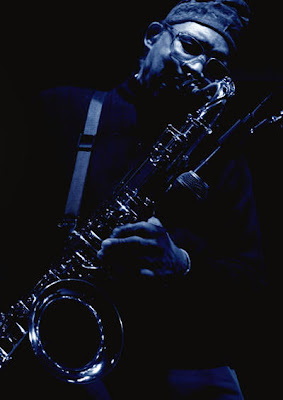
Playing around the center


In the beginning years of the 1970's I became a part of the North Chicago Musician scene. I was gigging a lot and meeting all different types and styles of musicians who were also working on the Near North side.

I became fascinated by the expanded potential of 12 tone music. As my studies in classical and jazz theory progressed, I desired to use my voice more instrumentally and wanted to be able to play around the groups of notes that defined a scale but were not limited to major and minor modes.

I was introduced to Fred Anderson and his fluid group of musicians. Fred took a liking to me and I was allowed to regularly sit in on gigs at the Amazing Grace coffeehouse. I was fortunate. This experience taught me about organization around intervals and playing with disparate tones. I also was able understand on a much deeper level, tonal colors.

The lessons of my year with Fred has remained with me today. Understanding the scales of perfume allows me to be fearless when I sense a major second in an evaporative bridge. It has taught me that a perfume sketch can include notes that are not always easy as long as there is a resolution that makes harmonious sense.


<

Monday, October 08, 2007

Building my bridge


Continuing on with the idea of creating a tart leather, I separately combined the following and after vibrating with my Hitachi Magic Wand (a superlative perfume mixer)
Clary EO
Ho Wood
Linalyl Acetate
Estragol
Anise Hyssop

Mellilot
Caraway (one drop)
Costus 1 dr

Leather, I am ending this topic


After evaluating and finding my compot somewhat muddy yet personally appealing, I decided to see how much top I could add on. I knew that my dilution was too thick but didn't want to think the composition out yet. I am going on a rough estimate of a total of 30 per cent.

I wanted to create a challenging top but not go into ugly. Something that happens often. Luckily I like ugly and just keep whatever mistakes I make in a special What was I thinking?cabinet

I chose a separate vial of a combination that includes but is not limited to:
a fresh distillation of Violet Leaf Absolute, Neroline, Citralast (creates a bit more longevity with a fresh feel) and an overly large amount of butter absolute.

COMPLETION OF THIS TOPIC
Butter is a fascinating but aggressive top. Had to blend it in better while retaining that totally outrageous first impression. So far have added an accord of softer ghee type effect with one tiny amount of Spearmint

The final Tweak


However, after sending off my accord, I decided to change the scent completely

10 per cent solutions of
Musk Tonquitine Luckily I've OD'ed so many times on this I didn't typically just pour an entire bottle into the mix. Using a dropper, I added about 10 drops. Also, while do love this particular musk, it is too sweet and adds a very gentle effect to the base and what I'm looking for is a more hide type of feel. So I continued with a wash of Tonalid for a musky feel without overtones. I also added a few drops of Vertine. I am not sure how this effected the accord as I am going purely by smell. A small bit of P Cresyl Acetate and Vernaldehyde which to me created a somewhat Buttery effect similar to Indian Sweeties.


And so I began to assemble some of my favorite bases with Leather in mind


I began by compiling notes that for me closely plus very remotely resemble hides.

I started with essences that had naughty, stubborn qualities as well as some notes that were calming, harmonizing

Beginning with Antique Sandalwood,Santalol,I continued adding

Birch Tar .01 per cent 2 drops
Choya Nakh 2 dr

Lentesque, Mastic

Helichrysum eo


A particularly waxy Orris Butter

Vetiver in 10 per cent dilution

Birch Leaf Givco

Angelica Root

Liatrice (fair amount)
Estragol
Toscanol
9/10/07
MuskT
Oud Incense Tict (Anh)
Elemi
Fleur du Chocolat (a cocoa, honey with rare florals)Wash in alcohol with a Vetiver Wash to use as my medium.
Then I let it sit

Leather Play


Since deciding to woodshed for an indefinite period of time, I have been playing with
Scent of the day -or - week, or whatever.

I was helpfully kept on course when I decided to participate in mfd of perfumes swap. Lou, a member of the group was hosting, she's nice plus, no rules, which pretty much cinched the deal.

I decided to create a Leather accord at least and, if time allowed, build a perfume around it.

I decided to play down the smokier notes in favor of a Leather impression composed of my favorite musk bases, fresh and sour middles with some kind of top that is not generally used.

Thursday, August 23, 2007

Looking For Perfume Making Classes? Readme


I am not teaching perfumery at the moment. However, here is a guide written by Lisa Camasi, the group moderator for botanical_perfumery (which you might want to check out) which is invaluable for the perfumer seeking guidance

Lisa Camasi is a long time botanical perfumer, artisan tincturist with several fascinating methods for hand-extracting natural essences. She is also a brilliant writer with a degree in linguistics from the University of California.. This has served to make her one of the most valuable communicators in the natural perfume world. She hosts two online perfume groups: botanical_perfumery@yahoogroups.com which is open to anyone and includes, I believe our own Dorothy Kingsbury among others. She also hosts another, invitation only, interactive perfume making group.

Anyway, to make a long story short, this is her piece on how to find the perfect perfume educator that matches one's needs.

There are more resources than ever for the average person to learn
about perfumery - natural/botanical and otherwise, and are VERY
reasonably priced - in fact most of them are free.

If you want to take a class, any class, do a little homework first and
make sure that the class you take will serve your needs, interests and
budget, and will deliver on its promises.

ASK A FEW QUESTIONS:
- What are the instructor's credentials, experience, and reputation,
professionally and otherwise? If s/he has formal credentials, are
they in a relevant field? Are they from a reputable institution? If
the instructor points to experience and a varied selection of "one
off" courses, one on one instruction/mentorship/apprenticeship with
another perfumer or perfumers, who are they, and what are their
credentials, what is their professional lineage? If the instructor is
self taught, how did s/he pursue their studies, and how did s/he
arrive at the conclusion that s/he had acquired sufficient knowledge
that s/he feels qualified to teach a professional course and charge a
professional fee? Is s/he published?

- Can references/recommendations be provided from former students?

- What books/literature is used to support the class, and what is the
additional recommended reading?

- What are the educational objectives of the course - what will you
have learned and be able to do after the class that you could not do
before the class? How will they be achieved? Is there a syllabus
from this or previous similar classes that you can view to evaluate
whether the course will meet your interests, skill level, and needs?

- Think about how you learn best. Some people do very well reading
from books, some prefer lots of graphics and pictures, and still
others absorb information best through auditory input and verbal
exchanges. Will this class be presented in a way that is suitably
accessible to you and your learning style? I have a good friend who
is a university lecturer in New Zealand, and one of the courses she
teaches is a distance course. It is at the graduate level, and
because the focus of the course is in support of the literature survey
the students need to conduct for their MA theses in Linguistics, it
works pretty well, but she said she can't imagine teaching any of her
other courses because so much critical learning happens in the face to
face exchange of weekly seminars and working collaboratively on
research and data.

- Consider all the available courses and resources in the context of
what you want, what you need, and what you can afford. Look for a
class that will teach you skills that allow you to continue learning
when the class is over, and leave you feeling empowered and encouraged
to do so - rather than enslaved to an expert who claims to hold the
key to the vault that safeguards the secrets of the ancient art.

- Le Parfumeur Rebelle has links to a few classes in natural/botanical
perfumery, or ones that cover naturals substantively (scroll down the
page to "classes".)
http://www.leparfumeurrebelle.com/education.html
If you're able to spend $800 for an online course, why not spend a
couple hundred more and get the benefit of learning perfumery "in the
style of the French perfumers" from *actual* French perfumers - ones
with the training, experience, materials, facilities and professional
acumen to make it worth your while and worth your hard earned money!!
(Not to mention the pleasure of spending a week in the heart of
Grasse!) There are other classes - Sunrose Aromatics has hosted
classes with Gail Adrian in the past, and Linda at the Perfumer's
Apprentice is an excellent resource as well.
http://www.perfumersapprentice.com/perfumersworkshop/

DO A LITTLE RESEARCH:
- Polish your bloody google, yahoo, dogpile skills. Be willing to
dive down a few rabbit holes as you follow the links within links. I
have found some of the most useful and relevant information this way -
as well as some wonderful and wonderfully obscure materials.

- Don't rely entirely on the internet, and remember that it is still
largely unregulated and there is as much unreliable information as
there is factual and useful information.

- Check out a few books at the library, and if your local library
doesn't have what you want, ask if they can get it for you through
interlibrary loan. If you live near a university, especially a public
one, see if they provide library privileges to the local community -
most do! You will be able to gain access to books through the
university that are unlikely to be available any other way -
especially out of print books.

- Safety... Don't rely on IFRA exclusively for this information, it's
not reliable! Read the MSDS for your materials and take a little time
and familiarize yourself with Pub Med
http://www.ncbi.nlm.nih.gov/sites/entrez/
you will get much more reliable information and you will learn a lot
more about your materials!

- There are a bunch of sites that will provide hours and hours of
reading (tons of useful information) about naturals and their chemical
components, as well as synthetics and compounds - here are a few of my
favorites:

http://www.thegoodscentscompany.com/

http://www.leffingwell.com/
http://www.bojensen.net/
http://www.ars-grin.gov/duke/

Bookmark these sites and spend some time following the links and
becoming familiar with the information (and additional
links/resources) they provide. Most vendors well known on this list
(Eden Botanicals, Natures Gift, Sunrose Aromatics, White Lotus) also
have copious amounts of information and links on their sites. I am
sure others here could add many more but this is a start.

- Whatever you do, don't believe the assertion that making perfumes
using aroma chemicals is the same as using naturals and that you can
learn everything you need to know in a class that only covers
naturals!! There is a lot of overlap in general technique, but if you
are going to use aromachems, do yourself (and your pocket book) a
favor and, as is good practice with naturals, learn how to use them
effectively and safely. Aromachems can be very unstable and sensitive
to degradation due to light and temperature, they often require
solvents other than alcohol, there are compounds as well as individual
aroma chemicals and the dilutions at which you would use them varies
wildly.

CHECK OUT SOME OTHER GROUPS:
- Give your chemophobia a rest (and brace yourself for the equally
irrational and perverse chemophelia you will encounter) and bring an
open mind! While I do not personally use aroma chemicals or
synthetics, my time on these lists has definitely honed my skills and
technique, and has made me look at naturals with a renewed interest in
their active chemical components and infused my creative efforts with
much needed precision, analysis and discipline:

http://groups.yahoo.com/group/perfumemaking/

Perfume Making is Jenny's group, there's a wealth of informative files
and links, and she has put together a couple of excellent power point
presentations. Discussion is lively, enthusiastic and fairly ad hoc,
though Jenny is great about introducing specific topics and questions,
and generating more focused discussions as well.

http://groups.yahoo.com/group/mfd_of_perfumes/


Manufacture and Design of Perfumes is Jo's group, and has more of a
collaborative classroom format. Class sessions might focus on a
discussion of a half dozen materials (natural and synthetic), a pop
quiz on some aspect of the history of perfume, or a discussion with
exercises on fixation, tincturing or solvents.

http://groups.yahoo.com/group/EarlyPerfume/

Early perfumes is Sally's group, and focuses on more academic and
early historical creation and use of perfume and scent. She has
written an excellent book and is extremely knowledgeable.

- Regardless of the group(s) you join, once there, spend some time
digging through the archives. This will give you an idea of the range
of topics that have been discussed, answer lots of questions before
you have formed them, and will make the questions you do ask once you
join the discussion more specific and useful Do this with any group
you join but especially one that has been around for a while or has
substantial archives - hell - join NP and mine those archives (if they
have not been deleted or selectively culled for the exclusive
reference of the owner.) The first couple years of posts on that
group are a wealth of information from some VERY talented and
accomplished perfumers (including industry professionals incognito)
who have long since moved on, weary of all the drama and politics that
can hijack the best of groups.

- Be willing to put in the time with your materials - books are
excellent references, and lectures can be tremendously informative,
but nothing, and I mean *NOTHING* takes the place of sitting down and
actively working with the materials: experimenting, formulating,
blending, evaluating, sharing, reformulating... the hours and days and
weeks you spend actively engaged in working with aromatics will be the
real education. Everything else - books, research, discussions,
groups, lectures - they are all optional.

- Work with your materials in dilution - it will save you unimaginable
amounts of money and will give you a better sense of how your perfume
is developing as you create it. I personally recommend using 5-10%
dilutions of most absolutes and 10-50% dilutions of eo's - it depends
on the odor intensity of the material you are working with. Create
your formula using these dilutions first, then add sufficient alcohol
to bring it to the appropriate strength (parfume, EDP, EDC, etc.)

- Invest in a scale sensitive to a hundredth of a gram, and learn to
use it - you will get infinitely more precise and reproducible results
if you do! Jen at lotioncrafter has a decent selection as well as a
useful comparison you can read to help you decide which one you want.

http://www.lotioncrafter.com/store/Scales-Accessories-c-262.html


Ebay is also a great resource for equipment, from lab glass to
ultrasonic cleaners/baths to use in tincturing and as an aid in
finishing/melding dilutions and perfumes (in fact I do believe that's
where the instructor of an $800 on line course just recently purchased
hers!)

- Form a local study group, or find a couple local partners in crime.
Swap perfumes, offer each other feedback, collaborate on a perfume,
or a collection of scented balms, or put together a
tincturing/infusing workshop. It builds community and supports your
habit, and happens to be a lot of fun to boot.

- Try a variety of materials, from a variety of vendors and regions.
All lavenders/vetivers/lemons/roses are not created equal, nor are the
aromatics that are derived from them.

- Don't limit the development of your nose to the perfumer's organ!
Take a wine tasting course. Learn to cook outside your comfort zone -
take an Indian, Mediterranean, Asian cooking class. Plant a fragrant
garden. All of these will propel you along the path of training your
senses inform your work with aromatic materials.

Last, but most certainly not least - don't be afraid to think for
yourself. The more stridently anyone insists that *they* are the
expert and that *you* need the training or information they are
selling, the more you ought to slow down, look around, and consider
all your options first.

If you think this is useful information - please feel free to forward
it to aspiring students, post to other lists, blogs, etc.,

Happy perfuming!

Lisa

Tuesday, July 24, 2007

Normal Skin needs TLC too!


Boucher: Diana Leaving Her Bath

I often have the question posed to me, "How often should I get a facial?"

The skin takes approximately one month to renew itself. During this period, cells are migrating from deep below the surface. By the end of roughly 33 days, a new layer of old skin cells have migrated to the surface of the skin. In order to maintain freshness and a healthy complexion, a professional cleansing once a month will remove dead cells, exfoliate patchiness and keep your skin looking soft.

Even though you brush your teeth and floss twice or three times a day, regular visits to the dentist are necessary to remove deep down plaque. Just as your hair shows regrowth, your skin also requires maintenance facials in order to allow the natural removal of old skin cells so that newer skin shines forth.

Mature, Dry, Dull Skin

Mature skin, dry skin, dull skin all are very responsive to hydration. These types of conditions need extra attention during the hottest months of summer.. In order to avoid more lines caused by the August sun, it is essential to feed the face with whole, nourishing products that protect the dermal matrix without creating build up. There is no more effective skin treatment to be found than floral blossom toners and honey. They never weight the skin down while at the same time, these lovely botanicals drench your pores with moisture and cooling liquid florals.

Photo: Titian: Venus

Just so darn sensitive!


Sensitive skin and Rosacea sufferers deserve better! Between that hot sun and your own body's reactions to just about everything, it's time you discovered how effective the natural combination of pure raw honey and floral toners can be on your poor, overwrought face.

The most important practice you can incorporate into your skin care program (besides obtaining a floral toning mist) is: A monthly soothing facial treatment. This helps to regulate inflammatory responses to outer irritants.

The Summer sun is either your best friend or worst enemy. Which would you like it to be?

Over-active? Broken Out? Honey Blossom Treatments will help

Despite the heat of August, oily, overactive skin is still vulnerable to the sun. It is especially important for those folks with oily skin and break outs to stick to an easily maintained cleansing regime twice a day.

If you also regularly use a product containing salicylic acid or benzyl peroxide, the months of July and August can see an increase in surface dryness with an underlying condition of over activity to balance out the parched skin surface.

Doing this with regular monthly visits to me for professional fine tuning will keep the surface of your skin hydrated while staving off excess oils and keep your skin free from bacteria, the number one cause of breakouts.

Doing this will reduce sebaceous over activity.

Hydrosols, Nature's Fountain of Youth and Healing


Every skin care treatment I perform uses hydrosols. These precious liquid by-products of steam distillation are the gentlest, most affirmative botanical toners available to us. these liquids are the result of the water used create essential oils. The steam from the process is re-directed into a collection vessel and can be used to tone the skin.

I never dilute or adulterate my hydrosols. Depending upon the time of year, we can select from a variety of toning hydrosols.

This time of year, I am using Jasmine and Rose Hydrosols. These divinely fragrant waters refresh the skin while providing a sweet burst of nectar scented liquid. The skin accepts and absorbs these toners with no sensitivity and no extra load of preservatives or chemicals.

My Bulgarian And Indian Rose Hydrosols calm over-heated skin while assisting in easing red and inflamed flushing.

I use my Jasmine Hydrosol, - in addition to its glorious aroma - for its ability to soothe mature, over-exposed complexions. There is truly nothing more luxurious feeling than the sensation of being drenched in Jasmine!

Other Hydrosols I use for my skin care services include
  • Lavender (Anti-inflammatory, soothing, calming)
  • Rosemary (Stimulating, cleansing, detoxifying)
  • Rose Geranium (Mature conditions, Rosacea)
  • Calendula (broken skin, lesions)

The Honey Blossom Reparative Treatment

The month of August, as all my newsletter subscribers know, is quite compromising if you don't take extra precautions to protect your face.

I have combined Raw local honey with the finest Rose and Jasmine Hydrosols found on earth to protect mature, dry, sensitive skin as well as clear and hydrate oily, broken out complexions.


This luxurious, nourishing and protection service is only $25.00 from July 23 through August 21, 2007

....And by the way, in order to join the newsletter (and catch all my special offers) log onto
my website and sign up right on my front page.

More About Honey (Continued from my newsletter)


I already mentioned in my newsletter that August relates to skin conditions that are vulnerable to heat.

The skincare service I designed for this period specifically addresses these concerns.

There is no way I could have designed a service to assist all of my clients without including honey. This miraculous substance has been used throughout history as a wound healing unguent.

Honey is the main ingredient in Ambrosia, a mythical sweet nectar drunk by the Gods and Goddesses of all civilizations. It was used to clean and disinfect wounds, preserve beauty, and even as recently as 2005, there was a study siting honey's superiority over drugs in the case of serious burns. Honey heals the skin, mends the pores and reduces the likelihood of post wound reactions.

Here is an excerpt from an article that lists naturally occurring hydrogen peroxide as a reaction to using honey on a wound


Honey is a traditional topical treatment for infected wounds. It can be effective on antibiotic-resistant strains of bacteria.


Honey is produced from many different floral sources and its antibacterial activity varies with origin and processing. Honey selected for clinical use should be evaluated on the basis of antibacterial activity levels determined by laboratory testing.


The antibacterial properties of honey include the release of low levels of hydrogen peroxide. Some honeys have an additional phytochemical antibacterial component.

Many authors support the use of honey in infected wounds and some suggest its prophylactic use on the wounds of patients susceptible to MRSA and other antibiotic-resistant bacteria.